
Robyn's Eulogy
A love letter, five years after.

My siblings in arts things:
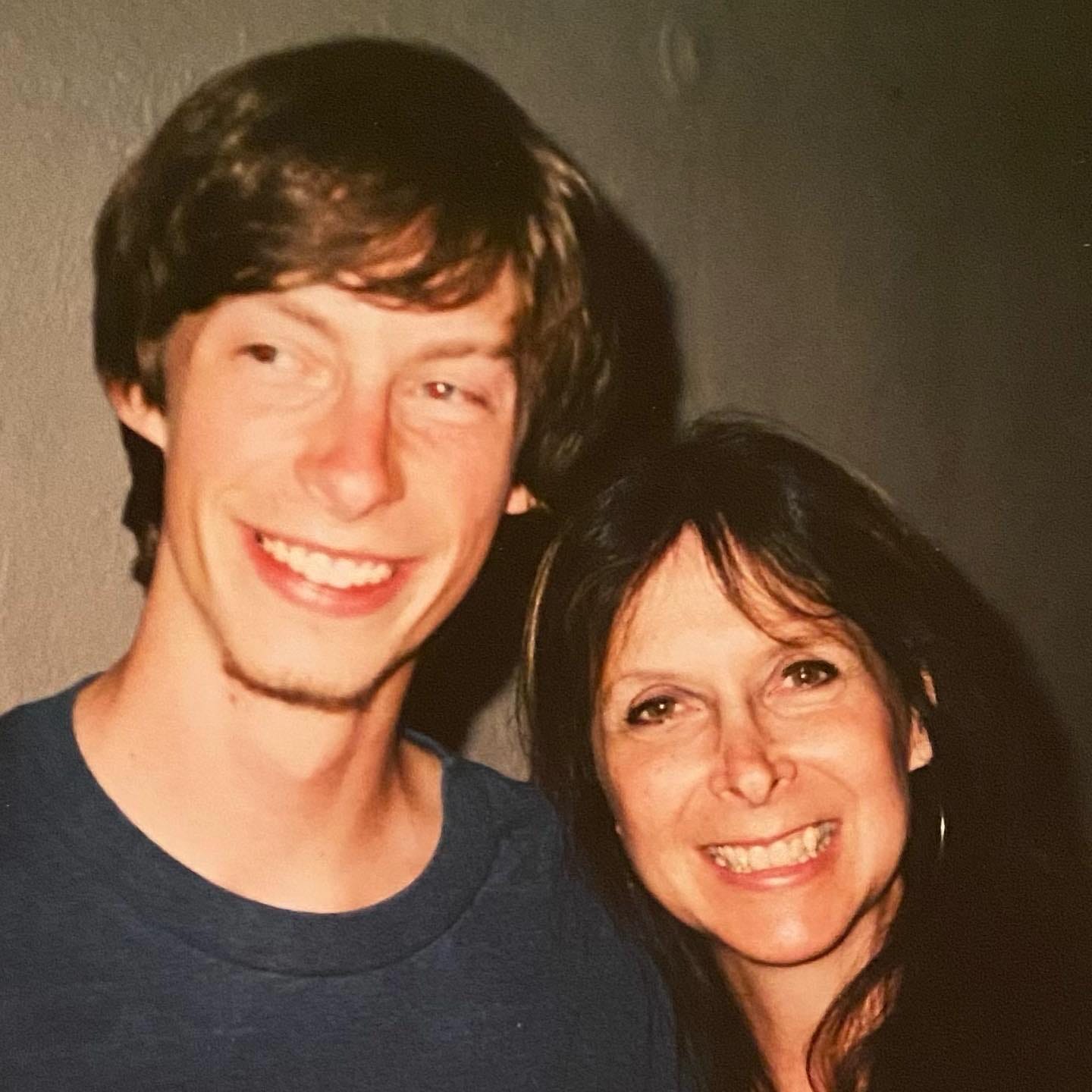
I hope you don’t mind a quick, personal edition of this li’l newsletter. Yesterday marked the fifth anniversary of my mom’s passing. I shared something I wrote about her on the other social meeds, and response was warm enough that I thought I’d share it here, as well.
Things are really hard and upsetting and anxiety-provoking for everyone right now, so maybe it’s a little dickish of me to slip a eulogy about dead moms into your inbox? Apologies if so. Please don’t read it if you’re not in the right headspace for this. If you do read it, though, I think you’ll understand why I feel compelled to share her with as many people as I can these days. We need more heroes to live and fight by, and she’ll forever be one of mine.
Incidentally, this is not the actual eulogy I delivered at her funeral. It was a freezing day in January and this would’ve been way too long to deliver. Instead, I did something I actually had a vision of myself doing years earlier: I played one of her favorite Phil Ochs songs on my guitar—a song about living and standing up for what’s right while you can. Then, after the service (which was a remote service for everyone but the few of us who could physically be graveside in Long Island during those pre-vaccine pandemic days), when everyone had either logged off or driven away, I played one more song for her, standing over the casket, just her and me.
The following is something I wrote two days after she died. I think it’ll give you a good sense of who she was, and who she’ll always be to me.
ROBYN GAE LACHER CASSIDY MARGOLIS
June 2, 1952 - January 19, 2021
Someone held a knife to her throat and she said fuck you.
It was a story we heard dozens of times growing up. The kind of story whose impact is blunted both by familiarity and the context in which it's told. Obviously, we knew she survived the ordeal, so, after the second or third telling, yeah, yeah, mom, this is the story where you were walking in Central Park and someone came up behind you, held a knife to your throat, demanded your purse, and you said fuck you. No big whoop.
***
My mom was a consummate Baby Boomer. I don't just say that because, demographically, she was born smack dab in the middle of the classifying years. She embodied her generation's most quintessential trait: mythologizing her past. A childhood in the 50s. Adolescence in the 60s. Young adulthood in the 70s. I never complained about this habit—she raised me to fascinated by the decades that made up her life before the Big Bad 80s (which, for me, was when the time of myths ended and Actual Life began). I was always glad to hear the hits.
The time her classroom was told Kennedy was shot. The time she watched The Beatles on Ed Sullivan. The time she watched men walk on the moon. The time she marched on Washington. The time Nixon resigned.
Her myths weren't always writ on such a large canvas, either. There were the more personal, intimate ones.
Her first, brief marriage to a young hippie fisherman. The time(s?) she did acid and went cliff-diving off the coasts of Maine. The time she was beaten with a hammer for dating someone who wasn't white. The time she ran away and lived in Thompkins Square Park until a bit of stray graffiti gave her location away to her older sister, who'd been tasked with finding her. (Her name was Robyn and she drew her eponymous bird on a wall, a dead giveaway to those looking for her. It's a story detail so perfect, it’s like something out of a fairy tale. Whenever I get around to getting a tattoo, I know that's the image I'm going to choose. I always wanted her to draw it for me . . . but by the time I had that idea, her motor skills were so degraded that it would never be an option—a story detail so anticlimactic, it can only be something out of Actual Life.)
***
Sometimes myths are etiological—here's why the sun rises, here's why the sea is foamy. Sometimes they're just entertainment—here's why Troy isn't a place anymore, here's a cool way to kill a monster. But that's all genre; as a genre writer myself, I can attest that genre's nothing more than a fancy word to help you organize your bookshelves.
However you classify them, what every myth really is, is part of an index. A key ingredient to a person's identity. A point on a map to trace your finger along. You Are Here. Here There Be Dragons. This Way to the Food Court.
My mom loved to trace her map points. She didn’t have much, but she had her stories. And one thing I’ve learned about stories is they teach us about ourselves as we tell them. They’re double-blessed, as Portia’s mercy.
Every time she told us one of her classics, my mom got to know who she was. Maybe that knowledge didn’t always last long, before the insecurities of the world, of being a single mother trying to raise two sons on a part-time income while fighting a degenerative disease, crept back in again and the map got fuzzy. But for those moments she knew. And I’m all too aware there’s not a lot of justice in this world but I hope there’s just enough of it that she got to feel as proud as she deserved to feel every time we rolled our eyes at a familiar tale.
***
There aren't enough, though. I will never not be angry that she didn't get more life, more chances to add to her atlas of self. I will never not rage that I had to start saying goodbye to her, piece by piece, faculty by faculty, memory by memory, before she was even out of her 50s and her dementia really began to strip her for parts. I will never not be furious that the ending of her story was so uniquely cruel.
The horror of dementia is that it steals your myths away from you.
But the genius of myths is that they're portable. They can be given to others for safe-keeping.
***
On Monday, her hospice nurse told me she was clearly on her descent.
She wasn't eating or drinking. Her skin had taken on a distinct pallor and texture that clearly signifies the final descent. You Are Here, the map read.
I said to the nurse, "I know you're going to tell me you can't answer a question like this but I'm going to ask it anyway. Do you have any sense of how long she's got left?"
The nurse laughed. "With anyone else? If you asked me if I thought she'd make it to the end of the week, I'd say no. But your mom is really, really stubborn. So."
She didn't finish that thought. She didn't need to. My mom was really, really stubborn.
In point of fact, she'd already gone through almost this exact situation before. She'd been on hospice care for a year and a half by now, precipitated by another episode of not swallowing, not eating, not drinking. She wound up rallying and, for the most part, coming back to us.
But this time did feel different. It was happening on the tail end of a noticeable decline, which, coupled with testing positive for COVID two weeks ago (a more or less asymptomatic case, but which had almost certainly contributed to her refusal of food), didn't bode well.
How long would she hold on?
I tried to arrange a video call with her, but the only person who could do that on her end had left for the day. So we'd have to try again the next day.
***
That next morning, I got another call, this time from the owner of her nursing home. She'd had another sharp decline overnight. He didn't think she had much time left. Quite frankly, he didn't know how she made it through the night.
My brother and I quickly got on a video call with her. She was barely more than a skeleton at this point. The hair she always took so much pride in-which we constantly begged her to spend less money on, and which she constantly, stubbornly, requested we get the fuck over it—had been buzzed away. Her eyes were dull marbles in deep, drowning sockets. She hadn't really been speaking for months at this point, but when she heard our voices she made some weak vocalizations. We stayed on with her for about an hour, telling her it was okay, that everyone was okay, and then she decided to finally let go with us on the line.
I know you can never truly know these things, but it really was like she'd been waiting for us. She made it through that one final night until we could be together, even virtually, one last time.
"It's amazing she did that," the hospice nurse said.
It was amazing. But not surprising.
That’s when I remembered a story I actually hadn't thought about in years. Because another thing about myths is, for such epic, world-defining tales, they're really as immaterial as strands of hair. You can lose track of them, forget how many of them you actually know. (They don't disappear, though. They're stubborn things, too. They simply bide their time until one day you're lost and need a very specific map.)
It's a story no context can blunt. It's a story whose familiarity only makes it sharper.
It's a story she told every day of her 68 years, never giving up, never getting beaten, never staying down for long, until she was good and goddamn ready to say goodbye on as close to her own terms as this cruel world would allow, and it was an absolute honor to know her and be raised by her and be with her when she finally decided now was her time, thank you very much.
Every day. For 68 beautiful, messy, complicated, increasingly unfair but unerringly stubborn years.
Someone held a knife to her throat and she said fuck you.
***
Thanks for reading, and much love to you and yours,
Nat
Nat, this beautiful tribute is so moving and paints a very strong picture. It really makes me wish I read horror. You are a wonderful writer! Much love to you. Tania
Thanks, Nat. That was a story I needed to hear today. It’s funny, but you and I worked on a show almost 20 years ago and I remember you talking about her then. I have a distinct memory of her as being an extraordinary person and thinking you were lucky to have her. I’m happy to revisit her today and receive that strong reminder to LIVE, godamit, while I still have the time.